


The gut is the main control center for many functions in your body. Your eating habits can be a direct source of energy to this system and can keep your body in good shape. Proper gut health foods can be beneficial to you in many ways, such as increasing your energy, alleviating pain, and maintaining a good level of overall health.
Your digestive system needs a variety of nutrient-rich foods absorbed from the gut to be healthy and functional. Eating a diverse diet consistently will provide your gut with adequate nutrition and keep it healthy for a long time.
Your gut is home to billions of good bacteria that work to break down food and keep your body safe from disease. These bacteria also support your mental well-being because they interact with the brain via what is called the gut-brain connection.
Eating gut health foods ensures that this system stays balanced. When these bacteria are in good condition, your body becomes more efficient in digestion, and your immunity gets stronger. Today, a lot of people decide to take probiotics, prebiotics, and other digestive-friendly foods as part of their diet.
Probiotics are live bacteria that add more good microbes to your gut. These bacteria improve digestion and reduce bloating. Many natural foods contain them, and they are easy to include in your weekly meals.
Some pretty good reasons for using probiotics could be:
Availability of probiotic-rich food products can be of great help if one wants to maintain proper functional gut health through a constant nutritious routine. After any disorder, after the period one is taking antibiotics, or after bad eating habits, they contribute to the restoration of equilibrium.
Prebiotics are fibers that feed the good bacteria in your gut. They work together with probiotics to help your gut microbiome grow stronger. Without prebiotics, the good bacteria cannot stay active.
Consumption of prebiotics in one's diet also ensures reliable digestive nutrition in the long run, especially if a person is after sustained energy and normal digestion. Apart from that, these commodities keep the microbial community in a better-fed state and help the gut in absorbing the nutrients.
Fermented foods rank highest among those acceptable for future consumption by people who are willing to significantly improve their gut health through the digestion process, since fermentation efficiently results in natural probiotics. By nature, such foods are extremely easy to consume, compliments of a decent diet.
There are some such examples:
These foods help your body digest meals easily and reduce stomach discomfort. Moreover, they improve the immune system of the body since they, in effect, strengthen the gut lining. Consistency in taking them can, thus, be beneficial to both physical health and psychological welfare.
Fiber is an absolute must for a well-functioning digestive system. Besides that, fiber also plays a role in satiety, meaning it will keep you full for a longer period of time. High-fiber gut health foods also help balance your blood sugar levels.
Some good sources of dietary fiber could be:
These nutrients are effective in preventing constipation and are ideal for giving health to the gut microbiome, which is necessary for the body to work regularly and comfortably, together with fiber.
A lot of fruits serve as gentle prebiotics and bring in vital vitamins to your diet. Their natural sugars are much friendlier to your stomach than processed ones. Fruits also refresh the body and enable the digestive system to stay lively.
Firstly, fruits excellent for gut health can be named as bananas, berries, kiwifruit, and papaya. They not only provide the nutrients but also help break the food down, calm the stomach, and nourish the digestive system.
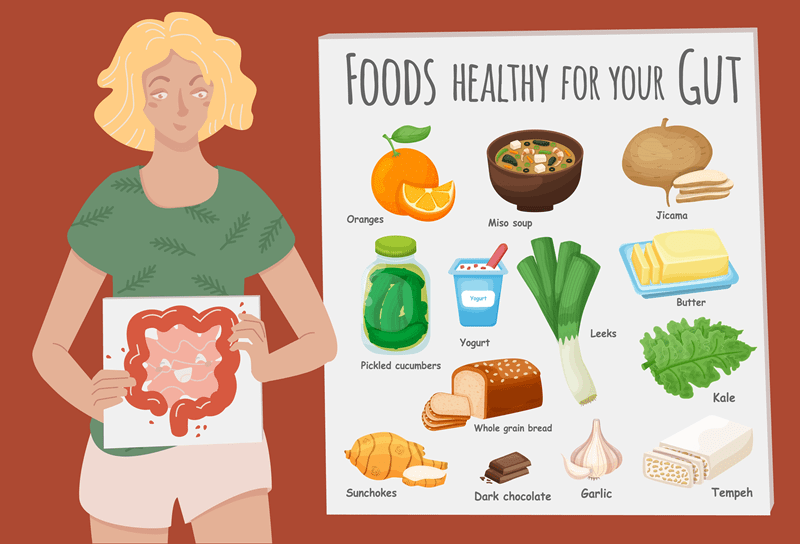
Vegetables are must-have gut health foods since they are full of vitamins, minerals, and plant fibers that gut bacteria love. Besides, they give the body’s defense a boost by providing it with protective antioxidants.
Some of the beneficial vegetables are:
Most of the above-mentioned vegetables are natural prebiotics, which means they support the growth of beneficial gut bacteria. Having a variety of colorful vegetables every day is a great way to get a diverse range of nutrients.
Whole grains are great sources of energy, besides being good for the gut. Their natural fibers facilitate digestion and keep the blood sugar level stable throughout the day.
Examples of whole grains are oats, brown rice, barley, and quinoa. Such foods are not only gentle on the stomach but also enhance the body’s nutrient absorption. At the same time, they make up an important part of the long-term digestive nutrition.
Good fats facilitate the body's absorption of nutrients and ease the inflammatory condition in the digestive tract. Additionally, they make up real energy reserves for the body and contribute to the gut lining's ability to function well.
Some of the good fat sources are: olive oil, avocados, nuts, and seeds. In fact, these alternatives are compatible with most of the meals and thus are quite convenient for those who want to integrate natural foods into their diet for gut microbiome strengthening.
Establishing a gut-friendly diet is not necessarily a complicated thing. There is nothing wrong with a modest start, having a bigger goal in mind, and gradually increasing the quantity of useful foods in your daily routine.
Some simple ways to begin are:
The little things you do each day can be a great help in maintaining your gut in good condition and making it strong.
The gastrointestinal system is not only the one that is affected by the gut. The latter, in fact, is a major factor in energy, immunity, skin health, and mood as well. Consuming different types of gut-friendly foods makes the body a happy and healthy place for the gut to live. Using diet as therapy, the gut microbiome becomes more resilient, and the system remains in equilibrium.
Filling your plate with the best gut health foods for better digestion is one of the most natural ways to raise your overall wellness and reap the benefits in the long run.
Eating yogurt, kefir, fruits, vegetables, and whole grains will set you on the right road towards better digestion and stronger immunity.
Probiotics are good bacteria that you introduce to your body; thus, the ones that reside in your gut are given a helping hand, and in turn, digestion is facilitated, immunity is strengthened, and the overall mood is improved.
Prebiotic foods are those that supply the bacteria with nutrients, and such products are bananas, garlic, onions, oats, and asparagus.
Most individuals who have decided to follow a diet that is high in fiber, contains probiotics, and is gut-friendly will see positive changes in a matter of weeks.
This content was created by AI