


If you are looking for sleep health tips, you probably are tired of restless nights and sluggish mornings. In the first few moments of this guide, learn how sleep health tips, sleep hygiene, and insomnia remedies all merge to make for better sleep habits that then improve your whole day. Get expert-backed insights and natural strategies for better rest with these sleep health tips, allowing you to build a practical nightly routine that actually works.
Good sleep is not a luxury; it's the bedrock of clear thinking, emotional stability, physical strength, and long-term well-being. Today, we break down powerful, science-supported, and simple-to-implement natural ways to improve sleep quality that anyone can start tonight.
Healthy sleep supports every function in the body, from the repair of tissues to the balance of hormones and the enhancement of cognitive performance. Many adults experience insomnia or inconsistent sleep patterns, not because they can’t sleep, but because they have never been taught any effective sleep health tips or how to practice strong sleep hygiene daily.
These are the core sleep health tips that help you reshape your sleep environment, mindset, and nightly habits so your body naturally shifts towards better rest without forcing it. Once you understand how sleep works, you can adjust your habits to match what your brain actually needs at night.
When you search for sleep health tips, you're really searching for actionable strategies that create long-lasting change. Strong sleep hygiene practices, along with proven insomnia remedies, work together to reset your natural sleep cycle. Here are the most effective tips experts recommend.
Sleep hygiene refers to simple daily behaviors that encourage better quality sleep. The concept involves environmental adjustments, relaxation habits, and consistent routines. Here's how you can strengthen your sleep hygiene naturally:
A bedroom built for rest matters more than people think. Your brain associates certain cues-light, sound, scent-with alertness or relaxation. Follow these steps to improve sleep hygiene:
Most people find that changing their environment completely works wonders for how quickly they sleep.
In developing better sleep habits, consistency is key. Your brain loves routines because repetition helps regulate your internal clock, or circadian rhythm.
Try:
The article discusses using meditation and breathing techniques when you want to fall asleep.
If you find it hard to go to sleep, there are effective and safe ways to help you get to sleep naturally without taking medication. Below is a list of natural remedies recommended by experts and supported by scientific research.
Blue light sends your body signals that it’s still daytime. By limiting screen time at night, you can increase the production of melatonin, your body’s sleep hormone. Consider using night or blue light filter settings on your smartphone or tablet, or wearing special glasses that filter out blue light for an hour prior to bedtime.
When you are trying to relax to go to sleep, consider using relaxation techniques like progressive muscle relaxation (PMR), deep breathing, guided sleep meditations (GSMS), or sleep sounds. You’ll find all of these methods useful in settling down your busy mind.
Stress is one of the biggest sleep disruptors, and lowering cortisol levels becomes key.
Some often-mentioned natural remedies include the following:
These insomnia remedies help your body ease into restfulness without the use of strong medications for sleep.
By getting better sleep, your body repairs itself much more efficiently over the night. This is associated with:
These habits support healthier REM and deep sleep cycles, both of which are essential for memory and recovery. Over time, better sleep habits become second nature, and each night is smoother than the last.
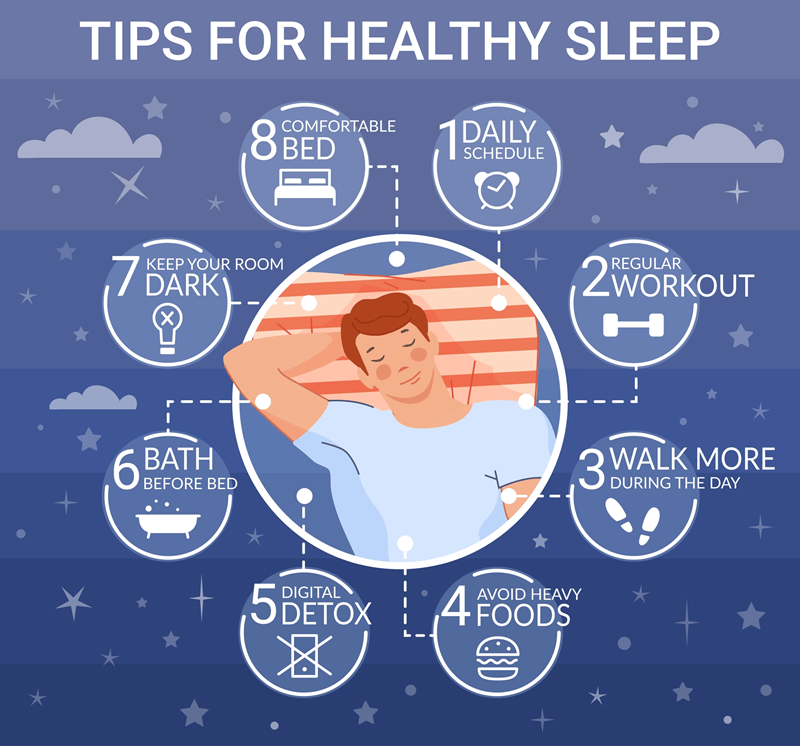
The following focused sleep health tips for better rest combine sleep hygiene, insomnia remedies, and better sleep habits into one powerful routine:
Track what time you went to bed, how long it took to fall asleep, and how refreshed you felt in the morning. Often, you'll see patterns pretty quickly.
Digestion amps up your body's activity level. Stop eating heavy meals 2–3 hours before bedtime.
Exercise increases sleep drive. Simply steer clear of intense workouts near bedtime.
This should be a calm, predictable, unstimulating hour. Make it your transition space each night.
Phones disrupt rest, as do TVs and tablets. This is one of the best natural means of improving sleep quality.
Your body loves rhythms, and the best way to improve rest is by working with your natural biological cues. Try these strategies:
Sunlight regulates levels of melatonin and improves the timing of sleep.
Dehydration can affect sleep, but avoid drinking too much water right before bedtime.
Nutrients such as magnesium, potassium, and B vitamins promote sleep. At night, avoid heavy sugars.
Anxiety at night very often emanates from daytime stress. Create some habits to relieve stress, like short walks, journaling, or breathing exercises.
The most important part of transforming sleep is consistency. Applying these sleep health tips, strengthening your sleep hygiene, and using reliable insomnia remedies builds a natural rhythm your body adapts to over time. Every night, practicing these routines makes better sleep habits automatic, improving every part of life.
Quality sleep is not about perfection-it's about predictable actions that retrain your brain and body. These natural ways to improve sleep quality will make nights calmer and mornings more energized.
Improve your sleep health by following these effective sleep health tips:
(1) Make improvements in your sleep hygiene
(2) Develop a calming evening routine before going to bed
(3) Limit exposure to blue light
(4) Develop a healthier sleep approach that will also naturally put your body at ease prior to sleeping.
Every night, sleep hygiene helps your body keep a consistent cycle of sleep and wakefulness. This can be accomplished through creating daily routines and providing an environment conducive to sleep, as well as helping the brain produce melatonin naturally to help people fall asleep and remain asleep easily.
Natural insomnia remedies include relaxation techniques, herbal teas, breathwork, magnesium supplements, and reducing screen exposure at night. These alternatives encourage the body to let go of tension without needing medication.
In fact, better sleep habits start with predictability, regular routines, minimal stimulation at night, early exposure to light, and healthier sleep patterns that teach your body to fall asleep more naturally and deeply.
You can naturally improve your sleep with natural techniques such as staying relaxed by reducing stress levels, keeping your room cool and dark, avoiding heavy meals before bedtime, using calming techniques, and practicing good sleep hygiene every day.
This content was created by AI